
You've probably seen it somewhere...
A post on Reddit. A TikTok video. Someone in a fibroid Facebook group swearing by her weekly castor oil pack routine. She says the bloating went down. The cramps got lighter. She finally slept through the night without waking up in a panic.
And you're thinking — is this real? Or is this another thing that sounds promising and goes nowhere?
We can answer that honestly. Because we've actually sold castor oil packs — for years, through our South African company. We know exactly what they do for women managing uterine fibroids. We know where they help. And we know where they stop.
This article gives you the full picture. No overclaiming. No dismissing. Just what we've actually seen — and what the biology says.
The Honest Answer on Castor Oil and Uterine Fibroids
Castor oil packs can genuinely ease fibroid symptoms.
Pelvic pain. Menstrual cramps. Abdominal pressure. Constipation. Stress and tension that builds up around your cycle. For all of these, a castor oil pack used consistently can make a real, noticeable difference.
But here's what castor oil packs cannot do.
They cannot shrink fibroids. They cannot dissolve fibroid tumors. They cannot cut off the blood supply feeding your fibroids or change the hormonal environment that lets them keep growing.
There is no scientific evidence that castor oil — applied topically or otherwise — can alter internal fibroid growth. That's not a dismissal of the practice. It's just an accurate description of what a topical application can and cannot reach.
The distinction matters. Because symptom relief and root cause change are two completely different things. And women managing fibroids deserve to know which one they're getting.
We'll come back to what root cause change actually requires. But first — let's talk about what castor oil actually is and why it genuinely helps with symptoms.
Location matters. Intramural fibroids grow in the uterine wall, submucosal fibroids push into the uterine cavity, subserosal fibroids grow outward, and pedunculated fibroids hang from a stalk. A small submucosal fibroid can cause heavy periods, while a large subserosal fibroid may create bladder pressure, constipation, back pain, painful sex, or visible abdomen enlargement.
Classic fibroid symptoms include heavy menstrual bleeding, clotting, prolonged bleeding, pelvic pain, urinary frequency, discomfort during intimacy, fertility struggles, fatigue, and anemia. In one large U.S. survey, heavy bleeding was one of the most bothersome symptoms reported by patients with fibroids (study).
Fibroid growth depends on hormones, especially estrogen and progesterone, plus an established blood supply. Fibroid tumors need that blood supply to stay alive and continue growth. That is why many women search for ways to shrink fibroids without surgery, and why castor oil packs have become so popular.
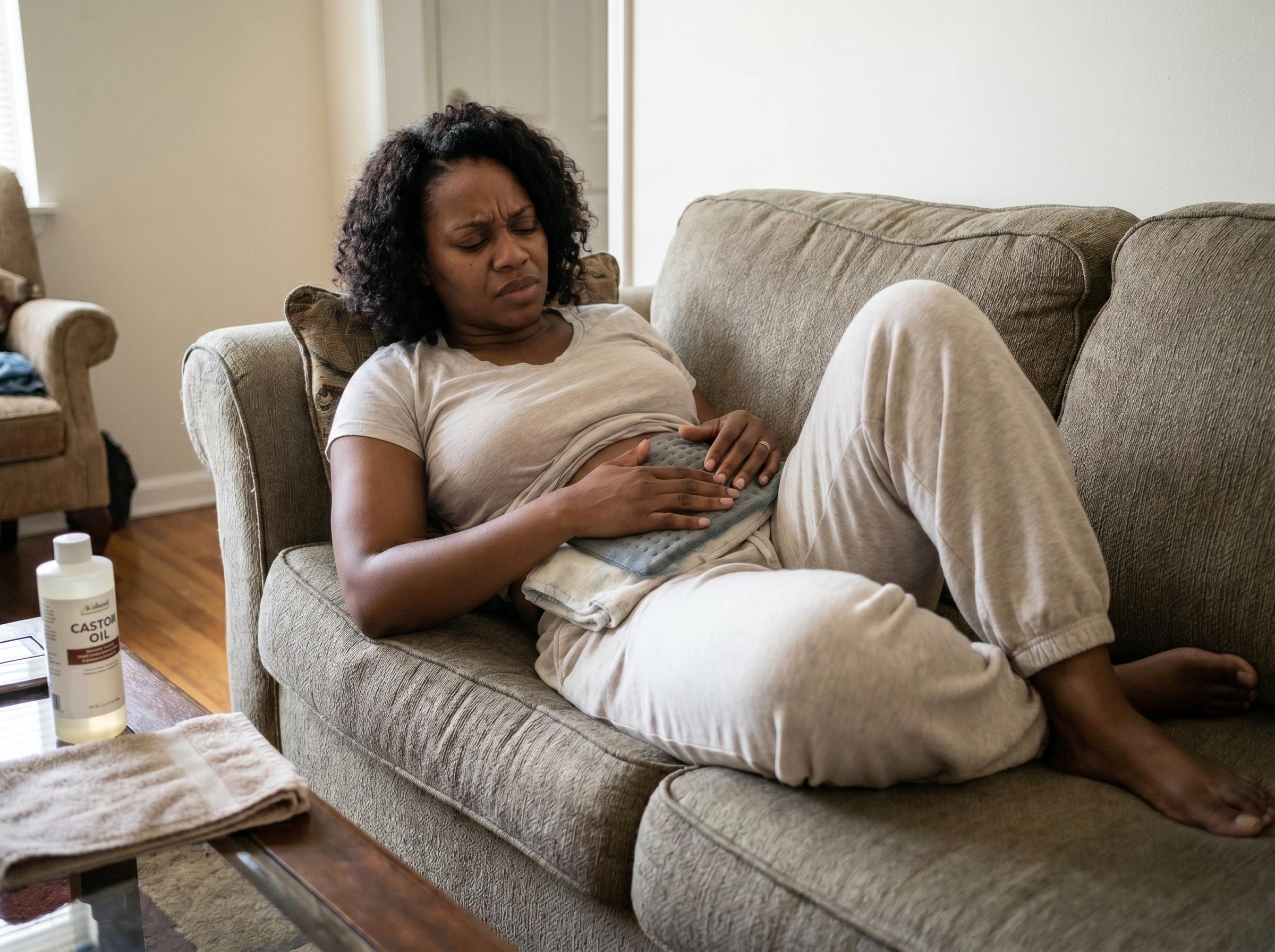
What Castor Oil Is — and Why It's Worth Taking Seriously for Symptom Relief
Castor oil is a thick, pale oil derived from castor seeds of the Ricinus communis plant, commonly grown in tropical parts of the world.
The active compound is ricinoleic acid — a fatty acid with documented anti-inflammatory properties. Studies on ricinoleic acid show it can reduce pain signalling and local inflammation when applied topically. That's not placebo. That's measurable biological activity.
When you apply castor oil over the lower abdomen with heat, a few things happen:
The warmth relaxes pelvic muscles. Blood flow to the surface tissue increases. The nervous system shifts toward a parasympathetic — rest and digest — state. And the ricinoleic acid works on local inflammation in the skin and superficial tissue.
That combination is genuinely useful for cramping, pelvic tension, and the kind of deep aching pressure that fibroids cause. It's also why castor oil has been used traditionally as a digestive aid...
It can stimulate bowel motility and help relieve constipation, which matters a lot for women whose fibroids are pressing on the bowel.
Castor oil packs are absorbed through the skin during application. But topical application cannot penetrate deeply enough to alter internal growths inside the uterus. The relief is real — but it's working on the symptoms, not the source.
What Castor Oil Packs Actually Help With
Let's be specific about where castor oil packs earn their place.
Menstrual cramps and pelvic pain. This is where they shine. The heat-plus-ricinoleic-acid combination is one of the most effective non-pharmaceutical approaches to period pain we've encountered. Women who use them consistently through their cycle often report cramps that are noticeably lighter.
Pelvic pressure and abdominal tightness. When a fibroid is pressing on surrounding tissue, the muscles around it often tense up in response. Heat and relaxation directly address that secondary tension — even if the fibroid itself isn't moving.
Constipation and digestive discomfort. Fibroids pressing on the bowel are a common source of digestive problems. Castor oil applied abdominally can stimulate bowel motility and ease that pressure. A high-fibre diet works on the same problem from the inside.
Stress and cycle anxiety. Many women with fibroids have what amounts to PTSD around their period. "The waking up at night in a panic. So stressful," as one woman described it. A castor oil pack ritual — lying down, applying heat, taking 30-45 minutes for yourself — has a nervous system calming effect that shouldn't be underestimated. It can also support overall health by calming the nervous system and creating restorative downtime. Some women also value the idea that this kind of ritual supports pelvic energy flow, even though that remains a holistic framework rather than established evidence.
General abdominal comfort between cycles. Not just during your period. The chronic low-level discomfort that many women with fibroids carry all month long can be eased with regular use, though daily packs can feel time consuming for some women even when the relief feels worth it.
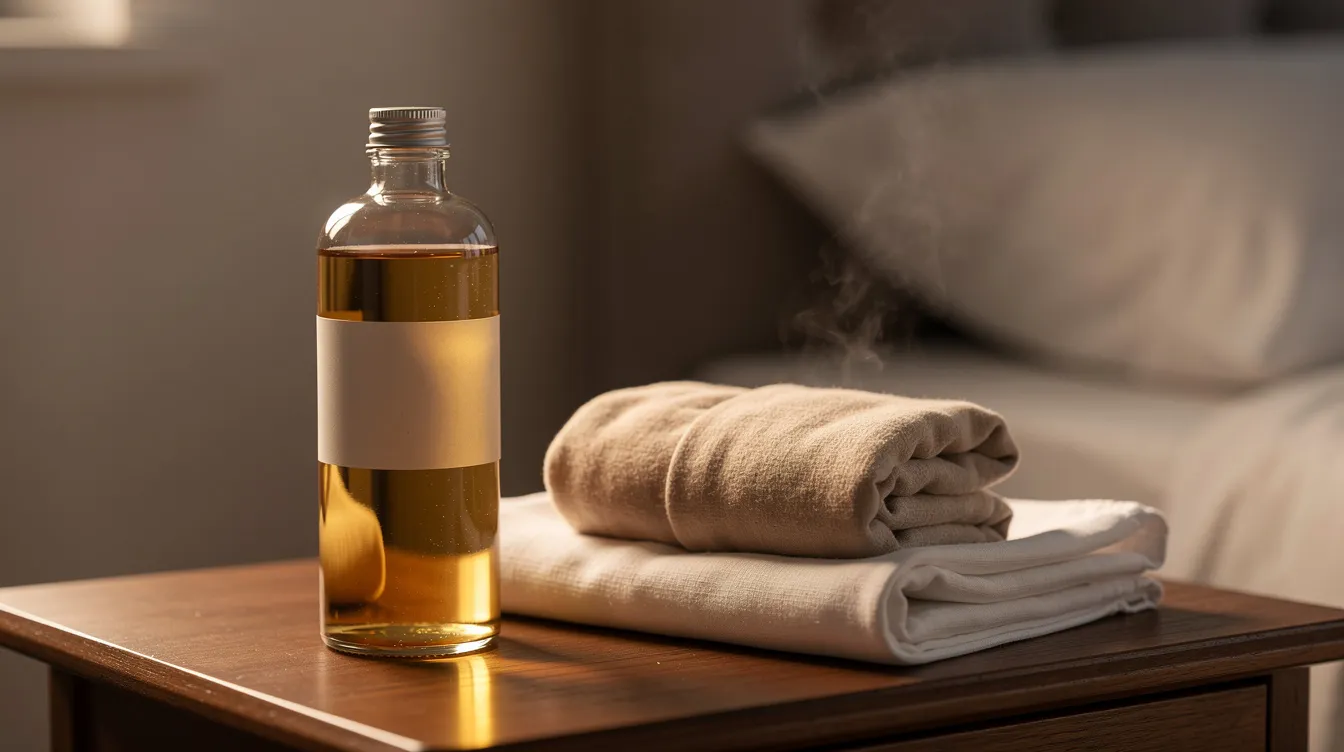
What Castor Oil Packs Cannot Do — And Why That's Important to Understand
Fibroid tumors are not soft tissue that can be dissolved from the outside.
They're structured masses of smooth muscle and connective tissue with their own blood vessel network — built to sustain themselves. Fibroids stimulate angiogenesis: the growth of new blood vessels that feed directly into the tumour, ensuring it's never starved of nutrients.
On top of that, fibroid tissue overexpresses aromatase — an enzyme that converts other hormones into estrogen locally, inside the fibroid itself. So even when a woman's overall hormone levels are reasonable, her fibroids are manufacturing their own private estrogen supply.
A topical oil applied to the skin cannot reach any of this. It is not a scientifically proven remedy for shrinking fibroids.
It cannot block blood flow to fibroid tissue. It cannot decrease fibroid size or eliminate fibroids. It cannot inhibit aromatase activity. It cannot clear the excess estrogen that fibroids depend on from circulating in the bloodstream. It cannot change the liver's capacity to metabolise and remove hormonal waste.
This is not a criticism of castor oil. It's just physics. Topical application has a reach, and internal fibroid biology is beyond that reach.
This matters because too many women spend months — sometimes years — using castor oil packs as their primary fibroid intervention. Feeling some relief. Thinking things are improving. Packs may ease symptoms, but they will not rid the body of fibroids. And not getting the imaging or the internal support that would actually change what's happening.
Castor oil packs deserve a place in your routine. They just don't deserve to be the whole plan.
The Inside-Out Problem: Comfort vs. Terrain Change
This is the distinction that sits at the centre of everything we do at Fibroids Freedom.
Comfort and terrain change are not the same thing.
Castor oil packs work from the outside in. They reach the surface. They ease the symptoms of living in a body that has fibroids. And that is genuinely valuable — because those symptoms are brutal. "I couldn't walk, sit, lie down or do anything," as one woman described her experience. Anything that gives relief deserves credit.
But changing the terrain that allows fibroids to survive and grow requires working from the inside out.
The internal environment fibroids depend on has three components. First, excess estrogen that the liver cannot clear fast enough — because modern life constantly overwhelms the liver's processing capacity. Second, aromatase activity inside fibroid tissue, manufacturing local estrogen independently of what the ovaries are doing. Third, the dedicated blood supply that fibroids build through angiogenesis to guarantee their own survival.
Addressing those three things requires internal intervention. Targeted liver support. Aromatase inhibition. Disruption of the angiogenesis process. None of that is reachable topically.
Castor oil packs are an excellent comfort tool. They're part of a holistic approach to living with fibroids while you address the deeper biology. They're not a substitute for that deeper work.
How to Use Castor Oil Packs Properly
If you're going to use them — and we think they're worth using — here's how to do it right.
What you'll need:
-
Organic, cold-pressed, hexane-free castor oil
-
Thick cotton or wool flannel cloth (not synthetic)
-
An old towel or reusable cover
-
Plastic wrap or a dedicated reusable wrap
-
A heating pad or hot water bottle
-
Old clothes or pyjamas you don't mind staining
Before you start: Do a patch test. Apply a small amount of castor oil to your inner arm and wait 24 hours. Castor oil stains fabric permanently, so protect anything you care about.
The process:
Soak the flannel cloth in castor oil and wring it lightly — damp, not dripping.
Lie down comfortably. Place the cloth over your lower abdomen, from just below the navel down to the pubic bone — directly over the uterus.
Cover it with plastic wrap or your reusable layer to protect clothing and bedding.
Apply gentle heat with a heating pad or hot water bottle. Medium heat, not high.
Rest for 30-45 minutes. This is your time. Don't rush it.
Afterward, wash the skin gently with mild soap and warm water.
Store the cloth in a glass jar in the fridge. Replace it when it smells off or changes texture. One cloth typically lasts several weeks with proper storage.
A practical schedule: 3-4 evenings per week on non-bleeding days. Run this consistently for 4-6 weeks, then assess what's changed — cramps, pressure, bloating, sleep quality, stress levels around your cycle.

Who Should Avoid Castor Oil Packs
Natural doesn't mean risk-free for everyone.
Do not use castor oil packs if you are:
-
Pregnant, or trying to conceive this cycle
-
Currently in heavy menstrual bleeding — wait until bleeding has eased
-
Recovering from recent pelvic or abdominal surgery
-
Dealing with pelvic inflammatory disease or active infection
-
Experiencing unexplained acute pelvic pain that hasn't been diagnosed
-
Using a hormonal IUD — check with your gynaecologist first
Watch for skin reactions. Redness, rash, or itching means stop and don't continue without medical advice. Sensitive skin is more reactive to ricinoleic acid.
Seek medical care immediately if you experience: soaking through a pad every hour for several consecutive hours, passing very large clots, severe sudden pelvic pain, fainting, shortness of breath, or chest pain. These are not castor oil territory. These need a doctor today.
Tell your gynaecologist you're using castor oil packs, especially if you take hormonal medications, blood thinners, or are planning any interventional fibroid treatment.
What We've Seen From Women Who Use Packs Alongside Deeper Support
In our years of working with women managing uterine fibroids, the women who get the most out of castor oil packs are the ones who aren't relying on them alone.
They're using the packs for comfort. And they're doing the internal work simultaneously.
"I don't feel pain or pressure... My stomach has started reducing in size," one of our customers shared. She was using castor oil packs during the week and our Fibroid & Cyst Tonic daily. The packs helped her get through the days. The internal support addressed what was driving the symptoms.
Another woman described her experience before finding this combination: "I am mentally exhausted and it's causing me to be physically tired. I'm just tired." That exhaustion — the kind that comes from chronic pain, chronic blood loss, and a body that never gets a break — is real. Comfort support matters for that exhaustion, even while deeper change is building.
"I feel like I can live my life again," she said several months later.
That's what a complete approach looks like. Not castor oil or internal support. Castor oil and internal support, doing different jobs simultaneously.

Where Castor Oil Packs Fit in a Fuller Fibroid Plan
Here's how we'd think about layering everything together.
Castor oil packs — 3-4 times weekly on non-bleeding days. Symptom comfort. Nervous system regulation. Pelvic tension relief.
Diet — high-fibre, low-processed, reduced red meat and alcohol. A high-fibre diet supports estrogen elimination through the digestive system. Cruciferous vegetables and fruits support liver metabolism of excess estrogen. This is the dietary layer of terrain change. Fibre also supports regular elimination and healthy digestion.
Movement — moderate, consistent exercise supports insulin sensitivity, circulation, and inflammation balance, and maintaining a healthy weight may help reduce fibroid risk because excess weight is associated with higher estrogen levels. Walking, yoga, swimming. Not punishment — support.
Internal botanical support — this is where the terrain actually changes.
Our Fibroid & Cyst Tonic addresses the internal biology that castor oil cannot reach. Dandelion Root supports the liver's ability to clear excess estrogen from the blood. Green Tea Leaf (EGCG) inhibits aromatase — cutting off the fibroid's ability to manufacture its own local estrogen supply, backed by research from Meharry Medical College and Johns Hopkins. Turmeric Root directly targets the chronic inflammation fibroids depend on. Puncture Vine disrupts the angiogenesis process — the mechanism fibroids use to build and maintain their own blood supply. Some women also look at supplements, including vitamin support, and grape seed extract may help reduce fibroid size.
The Femme Balance Tonic works alongside it to support the return to genuine hormonal equilibrium — so once the fibroid environment starts shifting, the whole system moves toward balance rather than rebuilding the same conditions.
Castor oil packs and the tonic system aren't competing. They're addressing completely different layers of the same problem. One works from the outside in. The other works from the inside out. Used together, they cover more ground than either does alone.
If you're ready to go beyond comfort and address what's actually feeding your fibroids, the two-tonic system is here.
When to See Your Doctor
Castor oil packs are a comfort practice. They are not a monitoring system.
Keep your medical appointments. Get your ultrasounds. Track your fibroid size with imaging so you actually know what's happening — not just how you feel day to day.
See your gynaecologist promptly if you notice new or worsening heavy bleeding, increasing fatigue or breathlessness from anemia, rapid abdominal enlargement, fertility struggles, or symptoms that are significantly disrupting your life.
Medical options for fibroids — uterine fibroid embolization, a minimally invasive procedure, radiofrequency ablation, myomectomy, hysterectomy, GnRH medications, watchful waiting — exist on a spectrum, and a good gynaecologist will talk through all of them with you based on your specific situation. Physicians can help you decide which option fits your symptoms, fertility goals, fibroid size, and age. Most women get meaningful symptom relief after uterine fibroid embolization, though results still vary from person to person. You deserve options that respect both the science and your desire for a natural approach wherever possible.
Castor oil packs, diet, movement, and targeted botanical support can all coexist with medical monitoring. They're not mutually exclusive.
Frequently Asked Questions About Castor Oil for Fibroids
Does castor oil shrink fibroids?
No. There is no scientific evidence that castor oil — applied topically as a pack or taken orally — can shrink uterine fibroids. Fibroids are internal growths with their own blood supply, hormone receptors, and structural mass. Topical application cannot penetrate deeply enough to alter them. Castor oil packs can ease the symptoms of fibroids, but symptom relief and fibroid shrinkage are different things.
What do castor oil packs actually help with for fibroids?
They're most effective for menstrual cramps, pelvic pain and pressure, abdominal tension, constipation caused by fibroids pressing on the bowel, and the stress and anxiety that builds around the menstrual cycle. The combination of heat, ricinoleic acid's anti-inflammatory properties, and forced rest has a genuine calming and pain-reducing effect.
How often should I use castor oil packs for fibroids?
Three to four times weekly on non-bleeding days is a practical starting point. Use for 30-45 minutes per session with gentle heat. Run consistently for 4-6 weeks before assessing whether your symptoms have improved.
Can I use castor oil packs during my period?
We'd recommend avoiding them during heavy bleeding days. Use them in the weeks between periods and in the lighter days at the end of your cycle. If your bleeding is already heavy, adding abdominal heat and stimulation is not advisable without medical guidance.
Is castor oil safe to drink for fibroids?
We're not discussing oral castor oil in this article — that's a different use entirely with different risks. Large oral doses can cause severe cramping, diarrhoea, and dehydration. This article covers external castor oil packs only.
What's the difference between castor oil packs and a proper fibroid treatment?
A useful way to think about it: castor oil packs work from the outside in, reaching surface tissue and easing symptoms. A proper fibroid treatment works from the inside out — targeting the estrogen environment, the aromatase enzyme that lets fibroids produce their own estrogen, the angiogenesis that sustains their blood supply, and the liver's ability to clear hormonal waste. One is comfort support. The other is terrain change.
Can I use castor oil packs if I'm trying to conceive?
Avoid castor oil packs if you are actively trying to conceive in that cycle. There is some concern that stimulating uterine contractions is counterproductive during the implantation window. During cycles when you're not in the conception window, discuss with your healthcare provider based on your specific situation.
0 comments